
Meet Our Dental Hygienists
Since beginning my journey in dentistry in 2015, I’ve been dedicated to helping patients feel confident and comfortable in their smiles. I started my career as a qualified dental nurse, gaining hands-on experience before graduating from King’s College London in 2021 as a Dental Hygienist and Therapist.
At the Blue House, my role bridges both Dental Hygiene and Therapy. As a hygienist, I focus on the prevention and management of gum disease. From thorough hygiene treatments to tailored oral hygiene advice, I aim to empower every patient to take good care of their oral health in a supportive and relaxed environment.

Dental Hygienist
CEB Cert in Dental Hygiene 1991
GDC No. 4097
Sharon qualified from Eastman Dental Institute, University of London as a Dental Hygienist in September 1991.
With over 18 years of experience, she joined The Blue House, Southfields Dental Centre in the summer of 2006.
Since qualifying in 1991 Sharon has kept up to date with dental courses of interest and is now continuing her professional development courses

Registered under s36C of the Dentists Act 1984, 2023
GDC No. 306678
Farzana Zulfiqar is a dental hygienist with over 10 years of experience in the dental field. She holds a Master’s degree in Dental Public Health from the University of Sheffield, complementing her clinical expertise with a strong understanding of public oral health.
Farzana is known for her excellent interpersonal and communication skills, fostering a supportive environment for both patients and colleagues. She is particularly skilled at managing patient concerns with empathy and professionalism, ensuring a positive and reassuring dental experience. Passionate about promoting oral health, she is committed to patient education and helping individuals achieve long-term wellbeing. She continually strives to enhance her clinical skills and stay updated with the latest developments in dental hygiene and public health.
Here is what you can expect from a hygiene appointment:
- Your teeth and gums will be assessed to determine the amount of plaque removal you will need and risk factors will be highlighted.
- Your teeth will be professionally cleaned with special equipment and pastes. This process is also known as scaling and polishing.
- The hygienist’s role is to show you how to look after your teeth so that they remain free from plaque in the future. You will be advised on the best tooth brushing technique and given tips on flossing and using interdental brushes.
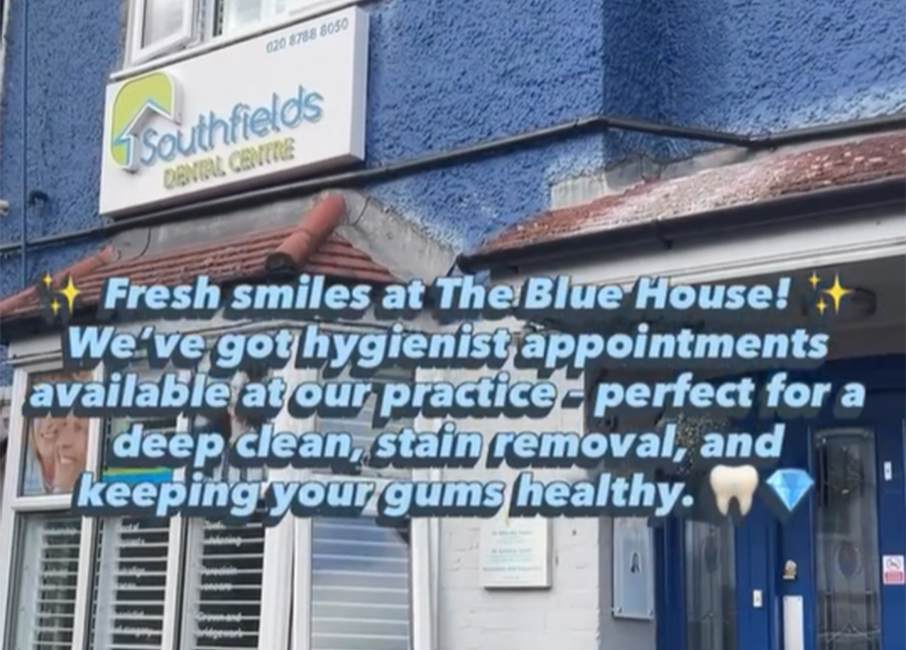
Experience a modern, gentle deep clean that leaves your smile feeling fresh and bright.
Airflow is an advanced cleaning treatment that uses a precise combination of air, water, and fine powder to remove:
- Stubborn plaque
- Surface stains from tea, coffee, red wine, and smoking
- Build-up in hard-to-reach areas
It’s completely pain-free and far gentler than traditional polishing methods—perfect for sensitive teeth and gums.
Dental hygiene at our practice also functions preventatively to treat gum disease and bad breath. If you have a bridge, denture, orthodontic treatment or a dental implant you will have specific hygiene needs that the hygienist will be able to assist you with.
It is recommended that you come in for regular hygiene appointments to ensure your mouth stays clean and healthy.
- Minimised risk of tooth loss.
- Reduced risk of developing tooth decay and need for fillings.
- Fresh minty breath.
Frequently asked questions
What are the benefits of visiting a hygienist?
Visiting the hygienist on a regular basis is an essential part of maintaining good oral health. A qualified dental hygienist can provide a range of treatments to help keep your teeth and gums healthy. By having your plaque and tartar professionally removed, you can avoid the build-up of bacteria in hard-to-reach places which can cause cavities, gum disease and other conditions.
In addition to removing plaque and tartar, your hygienist can also brighten up your smile with scaling and polishing techniques. Plus, they can give you tailored advice on how to look after your teeth properly at home with the right diet and regime for maintaining good oral hygiene. By visiting a hygienist regularly you can ensure that your teeth remain healthy, clean and free from decay or disease.
How often should I visit a hygienist?
The frequency of dental hygiene visits is based on individual needs and can vary from every 3 to 12 months. Discussing your unique oral health needs with your dentist or hygienist is important. If you have good oral health, preventive visits may be as infrequent as once a year. However, if you are prone to cavities or gum disease, more frequent cleanings may be recommended.
What should I expect when visiting a hygienist?
Your visit to the dental hygienist will usually start with an examination of your teeth and gums, followed by a professional cleaning. During the cleaning, your hygienist will use special tools to remove plaque and tartar that has built up on your teeth. This can help reduce the risk of decay, gum disease, and other oral health issues. After the cleaning, your hygienist may also polish your teeth and provide you with advice on how to keep your mouth healthy at home.
What treatments can a hygienist perform?
Dental hygienists are trained to perform a range of treatments including scaling and polishing, deep cleaning and root planing, fluoride treatments, and tartar control. They can also provide advice on how to brush and floss correctly, dietary recommendations, and preventive treatments such as sealants or mouthguard.
What is the importance of forming a good oral hygiene routine?
Good oral hygiene habits are essential to maintaining healthy teeth and gums. Brushing twice a day with fluoride toothpaste, flossing once a day and rinsing with mouthwash are all important parts of an effective dental health routine. Regular brushing removes plaque and food debris that can cause tooth decay and gum disease, while flossing between your teeth helps remove food particles that can get stuck in tight spaces which a toothbrush can’t reach. Rinsing with an antiseptic mouthwash helps reduce bacteria levels in the mouth for fresh breath and also reduces the risk of gum disease.
Interdental brushes are designed to get into the tight spaces between your teeth and help remove plaque and food particles that can accumulate in these areas. Using an interdental brush regularly helps reduce the risk of cavities, gum disease, and bad breath. It’s important to choose the right size for your teeth so it can effectively clean the hard-to-reach areas between your teeth.